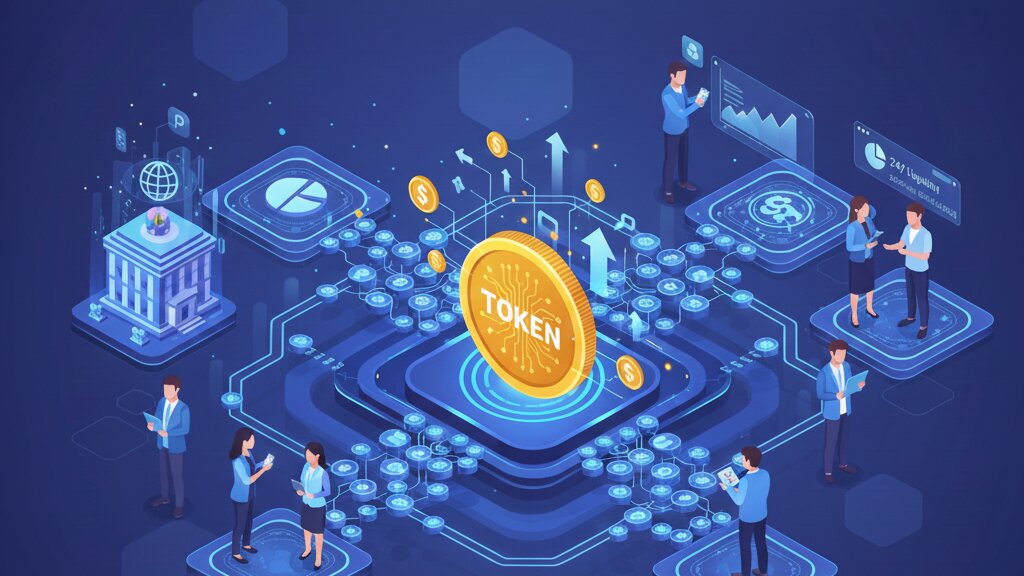
Fund tokenization spent years as a blockchain-industry talking point that large asset managers were happy to discuss and slow to adopt. That ended quietly. By late 2025, BlackRock, Franklin Templeton and JPMorgan all had tokenized funds live or in active development, which moves the question for everyone else. It is no longer whether tokenization is worth exploring; it is how wide the gap is growing between managers who have started and managers who haven't.
What Tokenization Does to a Fund
Tokenizing a fund converts its shares or units into digital tokens on a blockchain. Each token is a direct claim on the underlying assets, much like a traditional share, except that it is recorded on a ledger capable of enforcing rules through smart contracts. The valuation methodology stays exactly as it was. What changes is the infrastructure recording and transferring ownership, which moves from manual, intermediary-heavy record-keeping to a digital-first system.
Five Things That Change for the Manager
Distribution. Tokenized funds work with the digital wallets and platforms where a growing share of institutional and family-office capital already sits. For a manager otherwise reachable only through traditional subscription processes, that is a distribution channel that did not exist before.
Settlement and operational cost. Traditional fund administration still runs on multi-day settlement cycles (T+1 or T+2) and heavy reconciliation between intermediaries. Tokenization supports delivery-versus-payment settlement, where cash and asset move together, and lets eligibility rules such as KYC and AML checks be enforced at the point of trade instead of verified afterwards.
Access and fractionalization. A fund interest carrying a large minimum ticket can be broken into much smaller units — a $1 million private equity commitment into $1,000 pieces, for instance. The underlying investment is unchanged; the pool of qualified investors who can reach it is not.
Liquidity for illiquid strategies. Funds holding real estate, private credit or other locked-up assets can support a secondary market where investors trade tokens directly rather than waiting for the next redemption window. Tokenized shares can also be pledged as collateral in traditional and on-chain lending markets.
Transparency. A blockchain-based share register gives managers and investors a single real-time record of ownership, and supports more frequent NAV updates than a legacy system that reconciles positions periodically.
Where the Market Stands
Public trackers of on-chain real-world assets showed the tokenized fund and treasury market growing quickly through 2025. Tokenized U.S. Treasuries and tokenized private credit were the two largest categories, each in the low-to-mid single-digit billions of dollars by year end, according to aggregator data from RWA.xyz and comparable sources. Exact figures vary by tracker and move fast enough that year-over-year comparisons go stale within a quarter, so treat any single number carefully. The direction is the useful part: this has outgrown experimental-niche territory, and funds are increasingly issued natively as digital tokens rather than as traditional shares with a token wrapped around them afterwards.
What a Launch Still Requires
Tokenization is a layer, not a shortcut. Adding a blockchain to an existing fund structure does not produce a tokenized fund. You still need a regulated vehicle, a licensed manager, and custody and compliance infrastructure meeting the same regulatory bar as any traditional fund — the tokenization sits on top of that foundation.
FundBridge's tokenized fund solutions are built on that basis: a regulated Singapore platform carrying the licensing and operational side, so a manager evaluating tokenization is choosing a technology and distribution strategy rather than building regulatory infrastructure from a standing start. Delta Master Trust is a live example of that model on the platform today.
Frequently Asked Questions
Does a tokenized fund need a different licence than a traditional fund? No. A tokenized fund still needs the same regulated structure and licensed manager as any other fund. Tokenization changes how ownership is recorded and transferred; it does not replace the underlying regulatory infrastructure.
Is tokenization only relevant for large asset managers? No. Fractionalization and digital distribution are arguably worth more to a smaller or newer manager trying to reach investors outside their existing network.
What's the biggest operational change tokenization introduces? Moving the share register and settlement functions onto a blockchain-based system, which requires custody, compliance and administration partners equipped to support it. Not every fund administrator is.
The Fundamentals Still Apply
Tokenization changes none of the things that make a fund worth investing in. A manager still needs a sound strategy, a regulated structure and disciplined operations. What it changes is the distribution reach, settlement speed and transparency available on top of those, and the managers moving first are the ones setting investor expectations for how a fund should work.
Evaluating whether tokenization fits your fund? Talk to our team about what launching or migrating to a tokenized structure would involve.